The auditorium fell completely silent as the dean motioned for me to remain on the stage. I looked toward my parents, just as confused as everyone else. My father slowly stood up, his eyes already filling with tears. The dean smiled and continued, “For the past four years, this student has insisted on thanking her father for paying for her education. The truth is, he has spent those four years trying to convince her that she owed him more than she really did.” The audience looked puzzled. My cousin folded her arms, waiting for the explanation. The dean held up a folder and said, “Every semester, this student qualified for academic scholarships, merit grants, and work-study assistance. She also worked evenings and weekends to cover the remaining expenses. According to our records, more than ninety-five percent of her tuition was earned through her own hard work.” A wave of applause spread through the auditorium.
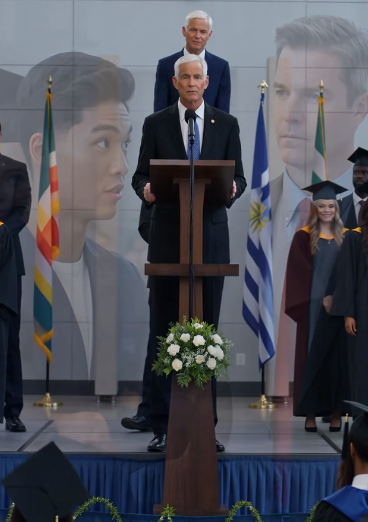
Then the dean smiled at my father. “The reason her father never corrected her is because he asked us not to.” I looked at my dad in disbelief. He quietly nodded. The dean continued reading from a letter my father had written years earlier. “If my daughter ever discovers how little I was actually able to contribute financially, I hope she never mistakes that for how proud I am of her. I couldn’t buy her education, but I promised myself I would never let her feel ashamed that I couldn’t. So if she wants to believe I carried her across the finish line, let her believe it until she’s ready to see that she walked there on her own.” I felt tears running down my face before I even realized I was crying.
My father finally came up onto the stage. “I’m sorry,” he whispered. “I wanted to pay for everything. I worked extra shifts. I took every overtime hour I could find. But it was never enough.” He smiled through his tears. “The only thing I could give you was a home to come back to after every difficult day, a ride to campus when your car broke down, and someone waiting up for you when you came home exhausted.” I hugged him so tightly that neither of us could speak for several seconds. The audience stood and applauded, not because of the diploma in my hands, but because they had just witnessed what real support looked like.
My cousin quietly walked out before the ceremony ended, but she returned later that evening during our family dinner. She apologized in front of everyone, admitting she had always assumed success had to come from money because that was how she measured achievement. She confessed that watching me graduate with honors made her jealous, and instead of celebrating me, she looked for a reason to diminish everything I had accomplished. I accepted her apology because I realized that bitterness often says more about the person carrying it than the person it’s aimed at.
A week later, I framed my diploma and hung it beside a photograph of my father standing proudly outside the university. On the back of the frame, I wrote the words he had unknowingly taught me that day:
“The greatest gift a parent can give isn’t paying for your dreams. It’s believing in them long before anyone else does.”
Whenever people congratulate me on earning my degree, they often ask how I managed to overcome so many obstacles. I always smile and give the same answer.
I earned the diploma.
But my father never let me earn it alone.